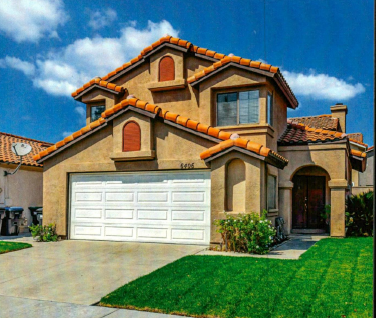
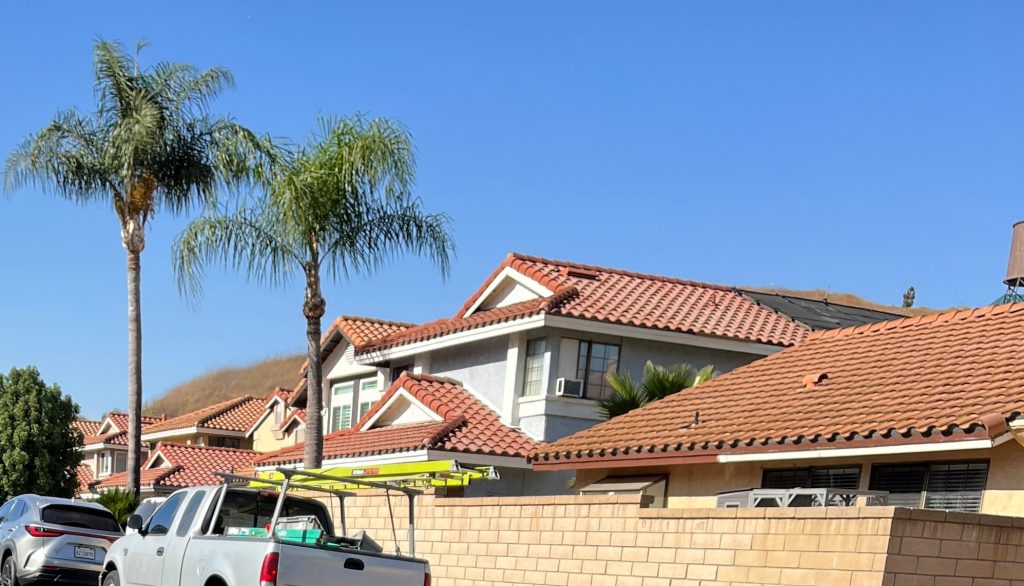
About ten years ago, our neighbors redid their roof. We have been in this house for 35 years, so we knew it would eventually be time for us to do the same. Our neighbors actually hired friends who ran a roofing business, and it cost them about $12,000 at the time, which felt reasonable back then. Around that same period, we spoke to two or three companies and received quotes in roughly the same range, including JT Construction. I cannot recall the others now.
Of course, we also knew that a decade later, we were not going to see numbers anywhere near that starting point again. Still, like many things in life, we procrastinated, and here we are in 2025–2026, finally getting around to taking care of it.
After talking to several vendors, including Modern Roofing, Performance Roofing, and a few others, we realized we do not need a brand-new roof. What we need is to replace the tar paper beneath the cement tiles. After many years, that tar paper becomes very brittle, begins to break apart, and that is when water can start to leak. In our case, we have had no obvious signs of leakage, but we are pretty sure that if we ignore this any longer, we will have a problem.
There are newer materials available now that are apparently more durable and last longer without breaking down as quickly. What the roofing company will do is remove the tiles, lay down new underlayment (a more resilient material than the old tar paper), then reinstall the same tiles and re-nail them. They will replace any broken tiles and replace the flashings. Flashings are the aluminum or sheet metal parts that go up against chimneys, walls, and other joints in the roof.
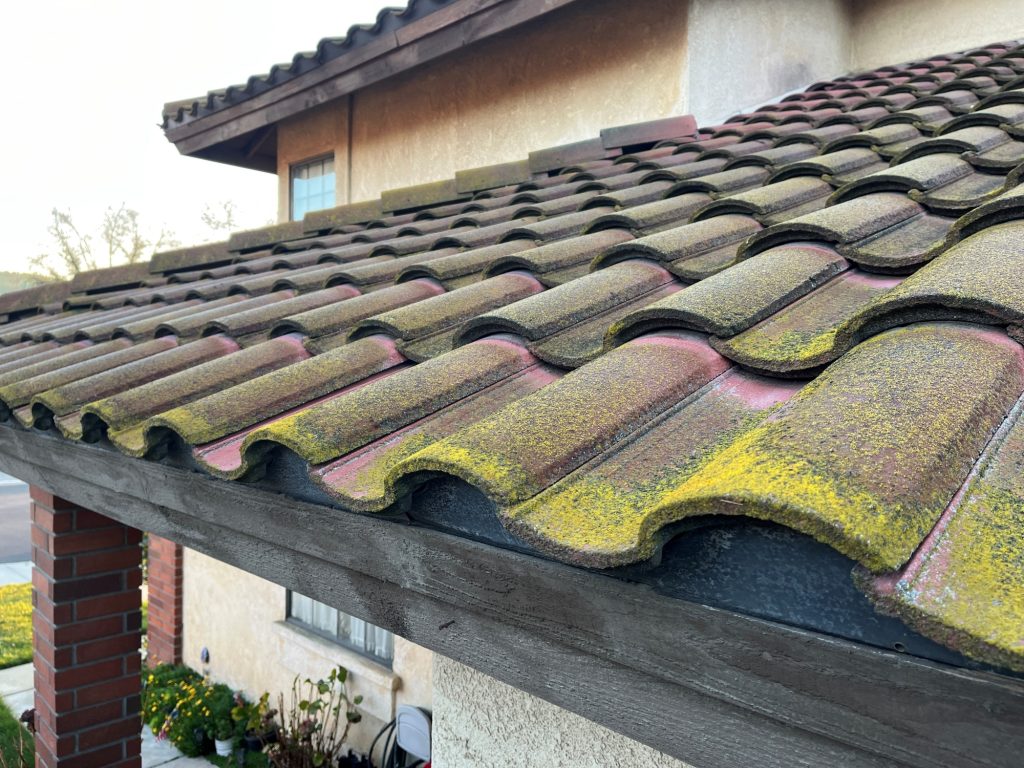
They will also re-pack the corners of the tiles and put new cement caps at the ends. These are the round cement pieces that finish off the corners because we have those S-curve tiles that need cement at the ends to keep them in place.
One thing we also noticed is that after 35 years, our roof has developed a slight mossy coloring. It is not thick moss, but it is a noticeable color change, and there is definitely a layer there. One of the options some of the roofers discussed was having the tiles power-washed before they are put back on. We did it, and it looks nicer. I think it was worth it because once the tiles are off the roof, it may not be the easiest time to clean them.
The first company we spoke with was Modern Roofing. They were actually based a little farther away, out toward Burbank, but they happened to be the first company we called, so they were the first to come out and give us a quote. Their initial quote came in at several times what we had seen years ago (around $35,000), which definitely got our attention. While we were talking, they called their manager and mentioned that they had a truck working in Ontario. They told us that if they could come over right away and start our job immediately, they could significantly reduce the price from that initial amount.
That sounded like a meaningful concession, and maybe it was. But we felt that since this was the first quote we received, we should talk to a few more companies before making a decision. We wanted to give some more local companies a chance, since Modern Roofing was coming from a bit farther away. So we thanked them, told them we would think it over, and kept getting more estimates. Truthfully, their approach seemed a little tricky to us.
One thing that was very helpful during this process was using local referrals. We looked at recommendations from people in the community via Chino Hills Connection on Facebook and at Google reviews. We felt it was important to work with a local vendor if possible, and Chino Hills Connection turned out to be a very good resource for finding out who had used them and whether they were happy with the work.
There are a lot of things you can easily overlook when getting quotes from a roofer, especially if you are relaying tile instead of replacing the entire roof. One simple thing is getting a commitment from them to clean up around the house after they are done. When they tear off tiles and pull nails and flashing, debris can end up all around the house. Some of our neighbors complained that their roofer left debris behind, especially nails, which is messy and dangerous.
The roofer we ended up choosing gave us a commitment to clean thoroughly. Some roofers even roll a large magnetic roller around the house to pick up nails that may have fallen into the grass or are not easily visible.
Another important point that came up while we were speaking to different roofers is that you should let the roofer pull the permit from the city, not you. The reason is that if you pull the permit and something happens to a worker, you could be held responsible. If the roofing company pulls the permit, they typically have insurance to cover liability if, for example, someone falls off your roof. One estimator told us that if a roofer asks you to pull the permit yourself, you should run, not walk, away from that roofer. That made a lot of sense to me, so we made sure to ask every company that would be pulling the permit.
There is another detail regarding the cement caps at the ends of the tiles. You should ask whether the cement color will match the tiles or if they will just use plain cement. We have had a few neighbors whose roofs were done, where the cement caps ended up in some strange color that did not match the tiles at all. My understanding is that there are standard cement colors they can use, and if you are particular, they can even custom color it to match your roof.
One reason we procrastinated the first time was that roofers are in high demand. We found out after getting a couple of estimates that, although we had pricing, they weren’t available to do the job for several months. That caught us by surprise, and being natural procrastinators did not help.
An important part of talking to roofers is to ask how far out they are scheduled. In other words, when can they start the job? Just as important is how long it will take them to finish once they start. This matters because you do not want your wood exposed for one, two, or three weeks if the roofer is not scheduled properly. The sun can dry out and damage the exposed wood. Also, when they stack the tiles on the roof during the job, a lot of weight is concentrated in one area, which can cause warping or damage if it sits there too long.
So make sure you find out, once they begin, how long it will take them to finish the job.
So where do we stand now? We signed a contract with Performance Roofing. It is a local father-and-son team that had good references on Chino Hills Connections. The son, Joseph, gave us a quote that came in well below the higher-end estimates we received and noticeably more competitive than the others we were considering, while still including most of the items we cared about – getting it done on time, replacing the underlayment, replacing broken tiles, new flashing, matching the cement caps, and cleanup.
We are now only a few days away from the scheduled start time, so I will report back once the work is completed and let you know how it all turns out.